
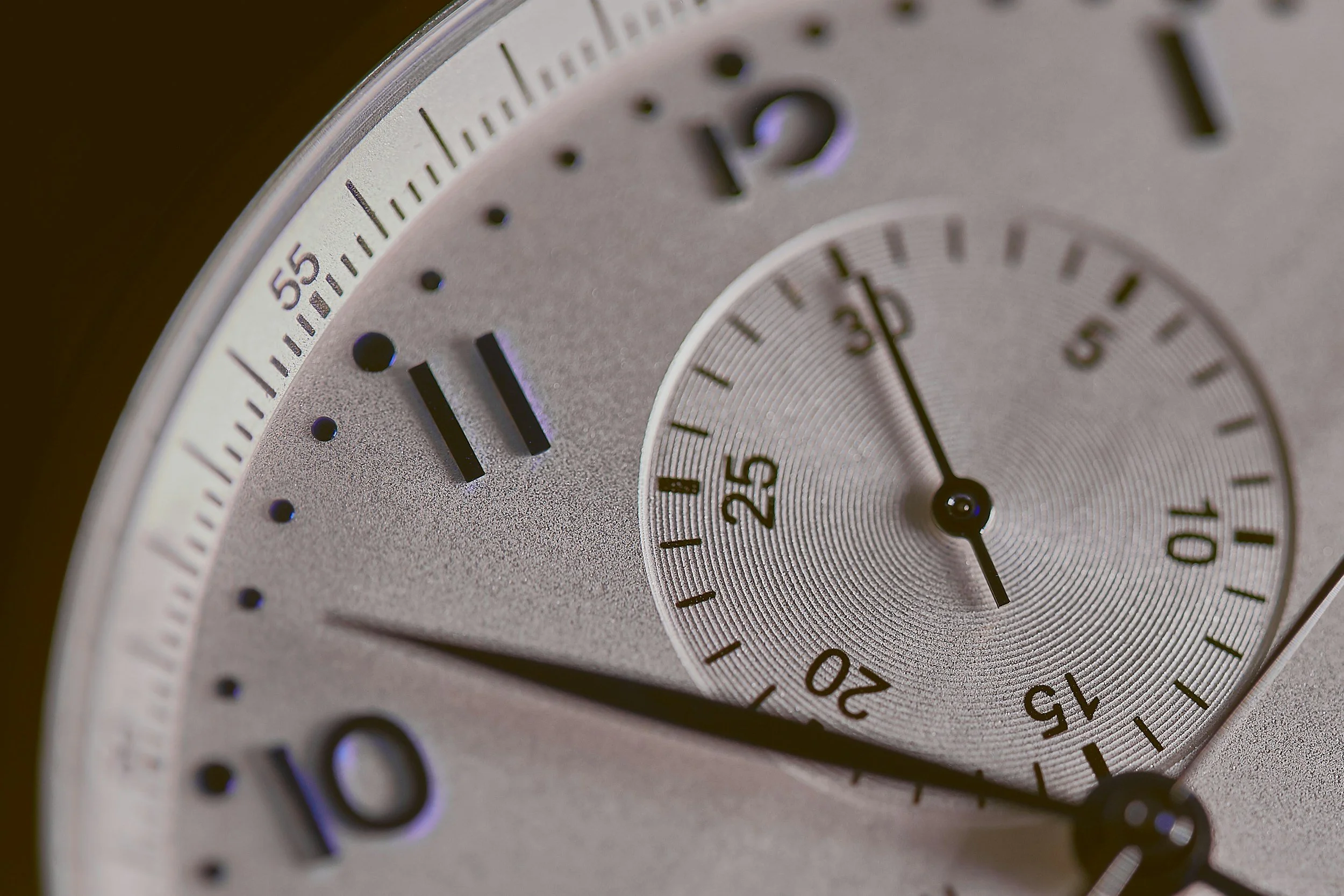
When Trauma Freezes Time: How Sound Can Restore Movement
Trauma is often described as pain remembered. That description is not wrong, but it is incomplete.
What distinguishes traumatic memory from ordinary memory is not intensity alone. It is time. Traumatic experience does not recede into the past in the usual way. It remains present, insistent, and unresolved. The story attached to it cannot move forward, revise itself, or be placed in context. It repeats with the same urgency each time it appears.
In this sense, trauma is not just pain remembered.
It is a story frozen in time.
This freezing is not metaphorical. It is felt in the body and in attention. The nervous system behaves as though the event is still unfolding. The present moment is continually interrupted by something that refuses to become past. Insight may be available. Explanation may be convincing. And yet the story persists, unchanged.
This is where sound becomes relevant, not as a solution, but as a condition.
What sound does not do
It is important to begin with limits.
Sound does not resolve traumatic stories. It does not reinterpret their meaning, erase their content, or neutralize their emotional charge. It does not replace therapy, relationship, or time. Any claim to the contrary misunderstands both trauma and sound.
Sound does not work at the level of narrative correction.
What sound can do instead
Sound operates on a different plane. It shapes how time is felt, not what a story means.
Trauma collapses time into a perpetual present. Sound, by its nature, unfolds. It moves. It cannot be held all at once. To listen is to follow something that is changing, moment by moment.
This matters because attention cannot remain entirely frozen while following an unfolding process. Even minimal sonic change reintroduces a sense of before and after. That movement is experienced first in the body, then, if at all, in language.
This is not catharsis. It is not insight. It is re-temporalization.
Restoring movement without confrontation
Traumatic narratives are rigid. They dominate attention and resist challenge. Direct confrontation often strengthens them, forcing the system to defend itself against correction.
Sound does not confront these stories. It does not argue with them or ask them to change. Instead, it redistributes attention.
While listening, attention is shared between the inner narrative and an external temporal process. The story is still present, but it is no longer the only thing happening. Its authority over the present moment softens, not because it has been disproven, but because it is no longer alone.
This distinction matters. Change that emerges without confrontation is often more durable than change imposed by force.
Re-storying as movement, not rewriting
When the temporal grip of a traumatic story loosens, something subtle can occur. The story does not disappear. It does not suddenly make sense. But it may begin to move again.
A memory may feel slightly less urgent. A familiar self-concept may feel less inevitable. The story may tolerate pauses. These shifts are rarely dramatic. They often go unnoticed at first.
This is what I mean by re-storying.
Re-storying is not rewriting the past. It is allowing the relationship between past and present to change. It is the gradual restoration of movement to a story that has been stuck in place.
Sound does not cause this. It sometimes makes it possible.
A necessary restraint
None of this is guaranteed. Sound may have no effect at all. It may be unsettling. It may reveal how rigid things feel without offering relief. These possibilities must be acknowledged.
The ethical posture of working with sound in this context is therefore one of restraint. No outcomes promised. No claims of repair. No implication that listening is sufficient.
At its best, sound offers a modest gift: a brief loosening of time.
Whether anything grows from that opening depends on the listener, their life, and the care available to them beyond the listening itself.
A closing thought
If trauma freezes a story in time, then the most humane intervention may not be explanation or correction, but the restoration of movement.
Sound cannot heal that story.
But sometimes, quietly and without instruction, it can help time move again.

Listening Without Promise: An Opening Chapter
It All Begins Here
Most of us have learned to approach sound with an expectation attached.
We listen to be soothed, distracted, informed, lifted, or changed. Sound is asked to produce an effect, preferably quickly and reliably. Even when we speak of music as meaningful or profound, we often mean that it carries us toward a familiar emotional state, one we already recognize and know how to name.
This project begins elsewhere.
It begins with the observation that many forms of suffering are not primarily problems of understanding. Grief, trauma, disorientation, and the loss of meaning often persist despite insight, explanation, and effort. What is disturbed in these states is not only what we think, but how time is felt, how attention moves, and how experience is held.
Sound has a particular relationship to these conditions.
Not because it heals, fixes, or reveals hidden truths, but because it shapes the pace at which experience unfolds. It can slow what has become rushed, soften what has hardened, and widen the interior space in which thought and feeling occur. Sometimes, under these altered conditions, meaning reorganizes itself.
This is not a promise. It is a possibility.
Why this does not begin with healing
The language of healing is compelling. It suggests repair, progress, and return. In many contexts, it is necessary and humane.
Here, it is misleading.
To describe sound as healing is to imply outcomes that cannot be guaranteed and mechanisms that are poorly understood. It places the burden of change on the sound itself rather than on the listener’s ongoing life. It invites passivity, the hope that something external will do the work for us.
This project does not take that position.
What sound can reliably offer is a change in conditions. Attention shifts. The sense of duration alters. The boundary between foreground and background softens. What, if anything, emerges from these changes cannot be predicted in advance, nor should it be.
To begin with healing is to misunderstand the medium.
Sound and time
Sound unfolds in time. It cannot be grasped all at once.
Unlike language, it does not argue or insist. It has direction and texture, but no thesis. We follow it, resist it, or drift away from it. In this sense, sound is less like a statement and more like a path.
Many forms of psychological distress involve disruptions of time. The past intrudes relentlessly into the present. The future collapses into threat or emptiness. The present moment feels either overwhelming or unreachable.
Sound can modulate these experiences without naming them.
A sustained tone can lengthen the present. Gradual change can invite patience. Repetition can create a sense of safety, irritation, or refusal, depending on how it is shaped. Silence, when it arrives intentionally, can feel held rather than empty.
These effects are not symbolic. They occur before interpretation.
What listening asks
Listening in this way is not passive.
It asks for a willingness to remain with experience without immediately organizing it into conclusions. It asks for tolerance of ambiguity and unfinishedness. It asks for patience, not as a moral quality, but as a perceptual one.
For many people, this kind of listening feels unfamiliar. We are accustomed to using sound to manage ourselves, to regulate mood quickly, to escape or intensify experience. To listen without promise is to loosen that control, at least temporarily, and to allow attention to settle where it will.
Nothing dramatic needs to happen.
If something dramatic does happen, it should be approached with caution. Intensity is not the same as integration. The measure of a listening experience is not what occurs during it, but what becomes possible afterward. Whether silence feels more tolerable. Whether thought slows. Whether the internal narrative loosens its grip.
Re-storying
The word re-story does not imply correction or improvement. It implies movement.
Our lives are shaped by stories we tell about who we are, what has happened, and what is likely to come next. Some of these stories are necessary. Others become rigid, narrowing the range of possible experience. Trauma, in particular, tends to freeze narrative time, trapping meaning in a perpetual present.
Sound cannot rewrite these stories. What it can do is change the conditions under which they are told.
When attention slows and the nervous system settles, alternative narratives sometimes surface, not as revelations, but as quiet possibilities. A memory may lose some of its urgency. A familiar self-concept may feel less inevitable. These shifts are often subtle. They do not announce themselves as breakthroughs.
They are better understood as re-storying, a gradual loosening and reconfiguration of meaning that occurs over time, with repetition, and without force.
The posture of this project
This project- this work - does not offer techniques to master or outcomes to pursue. It does not instruct the reader on how to listen correctly, nor does it claim special authority over inner experience.
Instead, it describes a practice of designing and encountering sound with restraint and care. It explores what sound can make possible, where it fails, and why limits matter. It treats listening as a shared responsibility between maker and listener, not as a service delivered and received.
If you are reading this in search of certainty, you may be disappointed. If you are reading because something in your life feels out of rhythm, and you are curious about what happens when time is allowed to move differently, you are in the right place.
Nothing in this project needs to be believed.
It only needs to be listened to.